Partner Eliza Maria Mosher
Queer Places:
Woman’s Medical College of Pennsylvania, 627 Arch St, Philadelphia, PA 19106, USA
University of Michigan, 500 S State St, Ann Arbor, MI 48109, United States
Vassar College (Seven Sisters), 124 Raymond Ave, Poughkeepsie, NY 12604
181 Joralemon St, Brooklyn, NY 11201, USA
Green-Wood Cemetery, 500 25th Street, Brooklyn, New York 11232-1317 United States
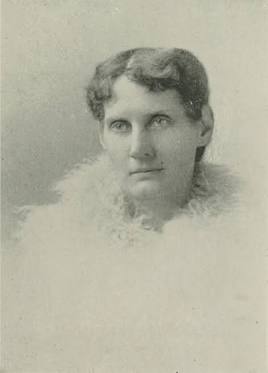 Dr. Lucy Mabel Hall-Brown (November 1, 1843 – August 1, 1907) was a pioneering 19th-century American physician, public health advocate, writer, and medical educator. A
graduate of the University of Michigan’s Medical Department, she became one of the earliest prominent female physicians in the United States, serving as Superintendent of
the Massachusetts Reformatory Prison for Women and as the first female physician appointed to the University of Michigan’s medical faculty.
Dr. Lucy Mabel Hall-Brown (November 1, 1843 – August 1, 1907) was a pioneering 19th-century American physician, public health advocate, writer, and medical educator. A
graduate of the University of Michigan’s Medical Department, she became one of the earliest prominent female physicians in the United States, serving as Superintendent of
the Massachusetts Reformatory Prison for Women and as the first female physician appointed to the University of Michigan’s medical faculty.
Born Lucy Mabel Hall in New Haven, Vermont, she showed an early determination to pursue higher education despite significant social barriers for women in science during
the mid-19th century.
She began her medical studies at the Woman's Medical College of Pennsylvania before transferring to the University of Michigan Medical School, earning her M.D. in
1878.
Following graduation, she pursued clinical experience at the New England Hospital for Women and Children in Boston—a crucial hub for female medical professionals where
she trained alongside other pioneering women.
Dr. Hall-Brown’s career spanned clinical practice, institutional leadership, academic medicine, and hygiene advocacy.
In 1880, she was appointed Superintendent of the Massachusetts Reformatory Prison for Women at Sherborn. During her tenure, she introduced progressive institutional
health standards, focusing on sanitary living conditions, preventative medicine, and humane care for female inmates.
In 1883, she returned to her alma mater as the university's first appointed female physician, holding the role of Assistant Physician to the University Hospital and
lecturer on hygiene.
She later established a private practice in Brooklyn, New York, focusing on gynecology and preventive care for women and children.
Historians of sexuality and women’s history, notably Lillian Faderman in To Believe in Women: What Lesbians Have Done for
America, contextualize Dr. Lucy Hall within the broader network of 19th-century female physicians who formed intimate, long-term romantic and domestic partnerships—often
referred to historically as "Boston marriages."
Hall met Dr. Eliza Mosher during their medical education and early hospital work. They shared medical offices,
collaborated on public health initiatives, and established joint practices.
The two doctors lived together in shared residences in both Massachusetts and New York, offering mutual financial, emotional, and professional support in a
male-dominated field.
In 1891, Lucy married Robert Allen Brown and became known as Dr. Lucy Hall-Brown. Despite her marriage, she maintained a close life-long friendship and professional
association with Dr. Mosher until her death in 1907.
As Faderman highlights, these long-term partnerships between female doctors were instrumental in surviving the professional hostility of the era. Partnering with
another educated woman allowed pioneering physicians like Hall and Mosher to sustain demanding medical careers without the societal expectation of domestic
subjugation.
References:
Other references:
- https://en.wikipedia.org/wiki/Lucy_Mabel_Hall-Brown
Support this project
This website is a passion project researched, developed, and funded entirely by me. If you find the content valuable and would like to help support the ongoing research and hosting costs, any contribution is deeply appreciated.
Thank you for keeping this independent resource alive!
My books on Amazon: Elisa Rolle's books
BACK TO HOME PAGE
